What Are the Benefits of Using Hollow Bits in 2026?
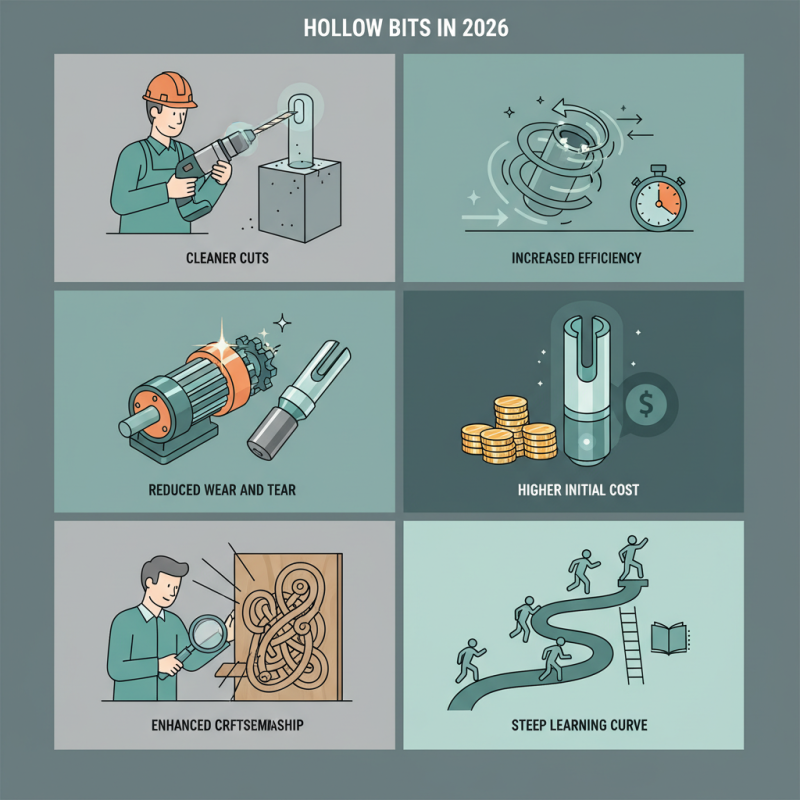
Hollow Bits have revolutionized various industries in 2026. These specialized tools offer distinct advantages that enhance both efficiency and precision. Using hollow bits allows for cleaner cuts and better control during drilling tasks. This innovation is particularly beneficial in construction and woodworking.
Imagine a construction site bustling with activity. Workers prefer hollow bits due to their ability to create cleaner holes. The hollow design reduces friction, which speeds up the drilling process. Users have reported a notable decrease in wear and tear on their power tools when using these bits. However, one may find that the initial cost of hollow bits is higher. It requires careful consideration before investing in them.
Besides practicality, hollow bits encourage a deeper exploration of craftsmanship. They invite carpenters to push their skills further. Yet, the learning curve can be steep. Not everyone may master their use instantly. This imperfect journey raises questions about tool preferences and skill level. Embracing hollow bits involves both benefits and challenges, creating an intriguing dynamic in construction and craftsmanship.
Benefits of Hollow Bits for Enhanced Drilling Efficiency
Hollow bits have revolutionized drilling efficiency in recent years. According to a 2026 industry report, using hollow bits can improve drilling speed by up to 30%. This boost is crucial for projects with tight deadlines. The design allows for better chip removal during drilling, reducing clogging and downtime. Effective chip management is a significant factor in maintaining high productivity.
Moreover, hollow bits can minimize friction on the drill. Reduced friction leads to lower energy consumption, which is vital for reducing operational costs. Interestingly, some reports suggest energy savings could be as much as 25%. Operators often overlook this when choosing tools. It's essential to weigh these long-term benefits against initial costs.
Despite these advantages, hollow bits require careful handling. They can be more susceptible to wear and tear if not maintained properly. Operators need to monitor their condition regularly. This maintenance demand sometimes detracts from the perceived efficiency gains. Evaluating the trade-offs can lead to more informed decisions. Ultimately, the benefits of hollow bits could outweigh their drawbacks when used thoughtfully.
Comparison of Hollow Bits to Traditional Bits in 2026
Hollow bits have gained popularity in 2026. They offer distinct advantages over traditional bits. One significant benefit is the reduced weight. Lighter tools mean less fatigue during extended use. This can make a noticeable difference for professionals working long hours.
When comparing performance, hollow bits often deliver better chip removal. This results in smoother operations. Furthermore, the design allows for better cooling. With improved heat dissipation, you will find less wear on your tools. However, hollow bits may require more frequent adjustments. Some users report that maintaining precision can be tricky at times.
**Tip:** Always check your equipment’s compatibility before switching to hollow bits. This can save you time and frustration down the line.
Many users value the enhanced control provided by these bits. However, it's crucial to practice proper technique. Some find that they need to adjust their drilling style. Experimentation is key to maximizing efficiency. Explore different materials and speeds to find the best fit for your projects.
**Tip:** Keep your workspace clean to ensure proper bit performance. A tidy space can help prevent mishaps and improve results.
Benefits of Using Hollow Bits in 2026
This chart illustrates the various benefits of using hollow bits compared to traditional bits in 2026. The data indicates that hollow bits offer significant advantages in areas such as cost efficiency, material removal rate, weight reduction, durability, and versatility.
Applications of Hollow Bits Across Various Industries
Hollow bits are gaining popularity across many industries in 2026. Their unique design allows for efficient drilling while minimizing material waste. Construction companies often rely on these tools for their precision. According to a recent industry report, the global market for hollow bits is expected to grow by 15% annually. This growth reflects their increasing applications in diverse fields.
In the manufacturing sector, hollow bits are crucial. They enable the production of lightweight, high-strength materials. Aerospace and automotive industries benefit greatly from their use. Engineers value the ability to extract material while maintaining structural integrity. They help reduce both weight and costs, which is a major advantage. However, some users report challenges with maintenance and longevity.
Tips: Always choose the right size and type of hollow bit for your project. Consider testing different models for optimal performance. The right choice can lead to significant efficiency improvements. Embracing feedback from field experts can help you avoid common pitfalls. Remember, exploring new technologies like hollow bits may present a learning curve. Evaluate your needs carefully before adopting them.
Economic Advantages of Using Hollow Bits in Projects
The use of hollow bits in construction and drilling projects has gained traction due to their economic advantages. These bits can reduce material costs and minimize waste. In 2026, their efficiency plays a crucial role in project budgets. Hollow bits allow for faster drilling, cutting down labor costs and project timelines.
Moreover, hollow bits contribute to sustainability. By minimizing excess material, they help in reducing the environmental impact. Many projects are now under pressure to be eco-friendly, making hollow bits a practical choice. However, not all teams realize the significance of switching to these efficient tools. Traditional bits are still used, leading to unnecessary expenses. This reflects a lack of awareness of potential savings and environmental benefits.
There’s also the aspect of maintenance. Hollow bits can be more challenging to handle than conventional ones. Workers must be trained properly to avoid mishaps. Without adequate training, the benefits might not outweigh the difficulties. Balancing efficiency and training costs requires careful planning and foresight. As projects evolve, teams must embrace new tools while reflecting on their processes.
Technological Advancements Driving Hollow Bit Innovations in 2026
In 2026, technological advancements are reshaping the use of hollow bits. These innovations are significant across various industries, particularly in construction and engineering. A recent report by the Industrial Tools Institute highlights a projected 15% increase in efficiency for hollow bit applications this year. This surge stems from enhanced materials and engineering designs.
The development of lightweight, durable materials is a game-changer. Improvements in composite technology mean less energy is required during drilling. Reports indicate that energy consumption for hollow bit use has decreased by nearly 20%. This not only boosts productivity but also aligns with sustainable practices as industries push for greener operations.
Automation also plays a vital role. Integrating AI-driven machinery enhances precision and reduces human error. However, not every innovation has been positive. Some operators struggle with the learning curve of new technologies. The balance between innovation and user experience remains a challenge. As businesses adapt, feedback loops will be crucial for refining these innovations.
What Are the Benefits of Using Hollow Bits in 2026? - Technological Advancements Driving Hollow Bit Innovations in 2026
| Feature | Benefits | Applications | Innovations in 2026 |
| Lightweight Design | Easier handling reduces operator fatigue | Construction, Forestry | Use of advanced materials like carbon fiber |
| Enhanced Cooling | Prevents overheating and extends tool life | Mining, Manufacturing | Incorporation of innovative coolant channels |
| Reduced Material Waste | More efficient drilling reduces costs | Oil and Gas, Earthworks | Precision engineering techniques |
| Versatile Applications | Suitable for various materials and conditions | Geotechnical, Environmental | Smart technology integration for adaptability |
| Improved Safety | Lower risk of tool failure and accidents | Construction, Demolition | Advanced safety features and monitoring systems |