
What are the Benefits of Using Desizing Enzymes in Textiles?

The textile industry faces many challenges. One crucial step in textile processing is desizing. This process removes starches and provides a clean surface for dyeing and finishing. Utilizing a desizing enzyme offers several advantages.

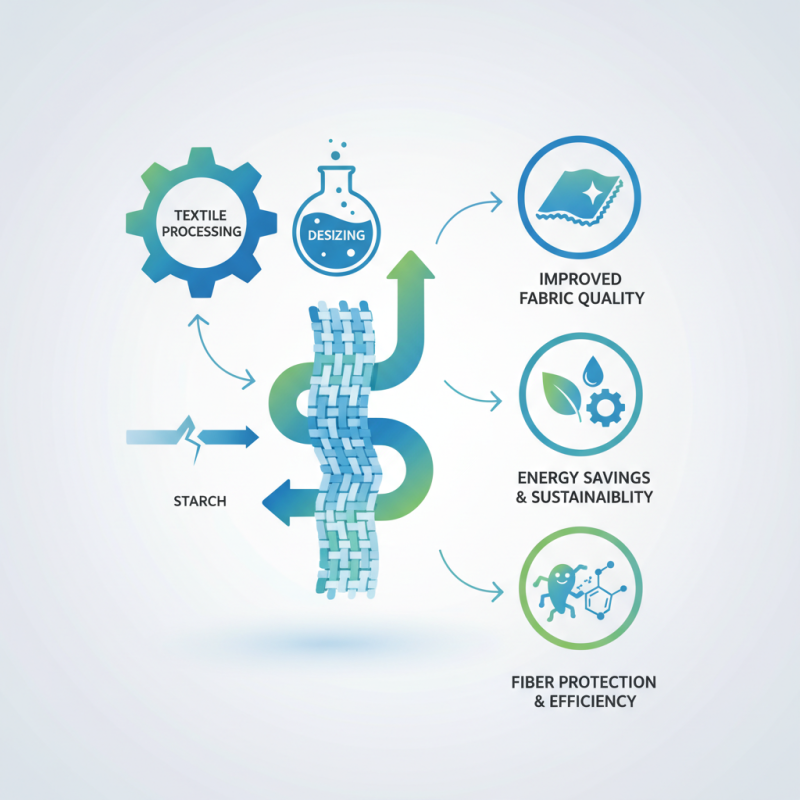
desizing enzymes are effective in breaking down the unwanted starch material. This enzymatic action leads to improved fabric quality. Enzymes target specific compounds without damaging the fibers. Moreover, they function at lower temperatures, saving energy. This efficiency is essential for sustainable practices in textiles.

However, the use of desizing enzymes is not without its challenges. Some may question their effectiveness in all conditions. There is also the cost of enzyme application to consider. Balancing these elements is vital for manufacturers. Overall, the integration of desizing enzymes can enhance production efficiency while promoting environmental sustainability.
What are the Benefits of Using Desizing Enzymes in Textiles?

Benefits of Desizing Enzymes for Textile Processing Efficiency

Desizing enzymes play a crucial role in enhancing textile processing efficiency. These enzymes effectively remove starch and other sizing agents from fabric surfaces. A recent report indicates that using enzyme treatment can reduce desizing time by up to 30%. This time-saving benefit translates directly into increased production rates.

Furthermore, enzyme applications often require lower energy input compared to traditional desizing methods, leading to environmentally friendly practices.

In terms of cost efficiency, a study from the Textile Research Journal shows that enzyme usage can decrease water consumption by 20%. This reduction is significant in regions facing water scarcity. Enzymes can also help maintain fabric quality, minimizing damage during the desizing process.

However, the effectiveness of enzymes can vary based on fabric types and processing conditions. Careful testing and optimization are essential to achieve the desired results.

While the benefits are clear, some operational challenges remain. The stability of enzymes can decline under certain pH and temperature conditions. This variability can lead to inconsistent performance. Companies must invest in proper training and equipment to ensure optimal enzyme usage. Despite these hurdles, the long-term advantages of using desizing enzymes in textile production are undeniable.

Improved Fabric Quality Through Desizing Enzymes in Textile Production

Desizing enzymes have become essential in textile production. They improve fabric quality significantly. These enzymes help remove starches and other impurities. This process enhances the softness and drape of textiles. Fabrics treated with desizing enzymes feel more comfortable. They also have better color retention.

Using desizing enzymes reduces water usage. It minimizes the need for harsh chemicals in the desizing process. However, implementing this technology can be challenging. Not all textiles react well to enzyme treatment. There can be variations in results based on fabric type. Some manufacturers struggle to achieve consistent quality.

Each batch might exhibit different textures or finishes. This inconsistency can lead to frustrations. It's crucial to assess the fabric before using desizing enzymes. Close monitoring is necessary during production. With careful application, many benefits can be realized. Higher quality fabrics may lead to improved consumer satisfaction over time.

Environmental Advantages of Using Desizing Enzymes in Textiles

Desizing enzymes offer remarkable environmental benefits in the textile industry. Traditional desizing methods often involve harsh chemicals, leading to significant water pollution. Reports show that enzymes can reduce water usage by up to 70%. This reduction is vital, especially in regions facing water scarcity.


Furthermore, using enzymes decreases the volume of wastewater generated. Unlike chemical agents, enzymes break down starches without producing harmful by-products. A recent study revealed that enzyme application could lower the biochemical oxygen demand (BOD) by 50%. This change significantly contributes to healthier aquatic ecosystems.


However, challenges remain. Enzyme production often relies on raw materials, which may not always be sustainably sourced. Additionally, companies must invest in training workers on enzyme handling. These issues need addressing to maximize the potential of desizing enzymes while minimizing environmental impacts. Transitioning to enzyme-based methods represents progress, but the path is not without obstacles.

Cost-Effectiveness of Enzyme-Based Desizing Methods

When discussing enzyme-based desizing methods, cost-effectiveness stands out. Traditional desizing often uses harmful chemicals, which can inflate production costs. In contrast, enzymes break down starches effectively. They work at lower temperatures and require less energy. This translates into savings on both utilities and chemicals.

Switching to enzymatic processes might seem daunting initially. Some manufacturers worry about enzyme stability and activity. However, modern formulations are robust and reliable. They allow seamless integration into existing production lines. Moreover, reducing resource consumption enhances sustainability. This shift not only minimizes waste but also boosts a brand's eco-credentials.

Despite these advantages, barriers exist. The initial investment in enzyme technology could be higher. There might also be a learning curve for staff. But the long-term return on investment can outweigh these early challenges. The balance between quality, cost, and environmental impact remains crucial. Ultimately, the textile industry must weigh these factors in their production strategies.

Enhancing Color Fastness and Dye Uptake with Desizing Enzymes

Desizing enzymes play a vital role in the textile industry, particularly in enhancing color fastness and dye uptake. These enzymes help remove sizing agents from fabric, making it cleaner and more receptive to dyes. This process leads to vibrant colors that last longer. When fabrics are treated with desizing enzymes, the final appearance is often more appealing. It's fascinating how a small change in the production process can have such a big impact.

However, using desizing enzymes can bring about challenges. The effectiveness can vary based on fabric type and conditions. Sometimes, it may require multiple attempts to achieve the desired color vibrancy. This variability can cause delays in production timelines. Moreover, not every enzyme works perfectly with all dyes. It's essential to test different combinations to find the best fit.

Incorporating desizing enzymes into textile processing can be beneficial, but it is not foolproof. It demands careful consideration of factors such as temperature and pH levels. A mismatch in these elements can decrease color quality. Recognizing these limitations is crucial for achieving optimal results. This approach requires constant reflection and adjustment to get it right.

Optimized by Optimole