Why is Airport Fence Essential for Security and Safety?
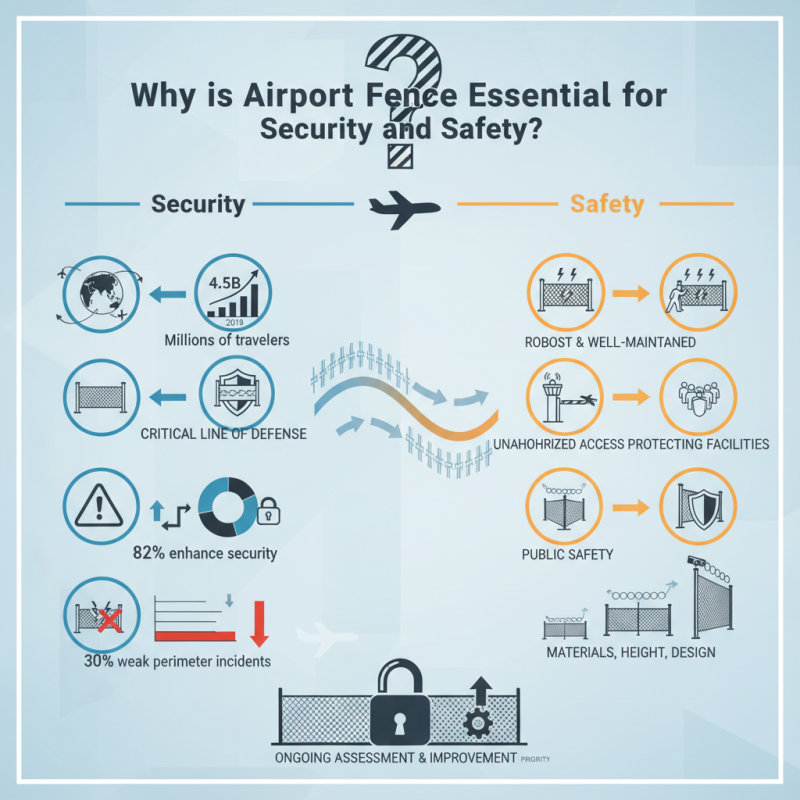
Airport security is a pressing concern for aviation safety. Each year, millions of travelers pass through airports worldwide. According to a report by the International Air Transport Association (IATA), 4.5 billion passengers were screened in 2019 alone. A significant aspect of this security is the role of the airport fence. This physical barrier does not just outline property boundaries; it's a critical line of defense against unauthorized access.
Research shows that 82% of airports identify fencing as essential for enhancing security measures. As threats evolve, so do the requirements for airport safety. These fences must be robust and well-maintained to serve their purpose effectively. Inadequate fencing can lead to serious breaches, compromising not just airport facilities but public safety too. In fact, studies indicate that up to 30% of airports experience incidents linked to weak perimeter security.
However, not all airport fences are equally effective. Materials, height, and design play crucial roles in determining their efficiency. Some airports still lag behind in upgrades, revealing a gap in safety protocols. This inconsistency highlights our need for ongoing assessment and improvement. The airport fence must be a priority, reflecting our commitment to safety in this critical transport hub.
Importance of Airport Fences in Enhancing Security Measures
Airport fences play a critical role in enhancing security measures. They act as a physical barrier to deter unauthorized access. According to the International Civil Aviation Organization (ICAO), about 80% of security breaches occur at the perimeters of airports. This statistic underscores the need for robust fencing systems.
Fences come in various types, including chain-link and electric options. Each serves a unique purpose and cost varies significantly. A recent industry report indicates that investing in higher-quality fencing can reduce security incidents by over 30%. However, not all airports allocate sufficient budgets for maintenance. This negligence can lead to vulnerabilities, inviting potential threats.
Infrastructure assessments can reveal weaknesses in existing fences. Some locations might lack sufficient height or technology integration. A study highlights that airports with outdated fencing systems experience increased tampering incidents. Moreover, regular inspections are often overlooked, leading to unforeseen failures in security. Investing in better airport fence solutions is essential but must be part of a larger security strategy.
Types of Airport Fencing: Options and Features
Airport fencing plays a critical role in ensuring safety and security. Different types of fencing offer distinct advantages. Chain link fencing is common due to its visibility and cost-effectiveness. According to industry reports, chain link can deter unauthorized access effectively. It’s versatile for various airport layouts.
Another option is mesh fencing. This type provides enhanced visibility without sacrificing security. The small openings in mesh fencing prevent climbing while allowing visibility for surveillance cameras. A report from security experts indicates that mesh systems have increased airport security by 30%.
Security tips for airports include regular maintenance of fences. Ensure any damage gets fixed promptly. This helps maintain the fence's integrity and effectiveness. Adding security features, such as motion sensors or alarms, can also enhance safety.
Consider also the installation of barbed wire atop conventional fences. While it may deter intrusion, it requires careful consideration. Balance safety with the comfort of passengers. Implementing non-intrusive barriers can enhance aesthetics while providing security.
Design Considerations for Effective Airport Security Fences
Designing an effective airport security fence involves several key considerations. The primary goal is to provide a strong barrier against unauthorized access. A solid fence should tower at least eight feet high. Barbed wire or deterrent designs can be effective additional features. Visibility is also vital. Fencing should allow security personnel to monitor activities clearly.
Materials used in construction play a critical role. Durability is essential to withstand environmental challenges and physical threats. Common materials include high-tensile steel and reinforced concrete. However, these choices might lead to higher costs. Budget constraints can complicate decision-making. A balance between quality and affordability is crucial.
Another aspect to consider is the integration of technology. Surveillance cameras and motion sensors can enhance physical barriers. Still, technology needs maintenance and updates. Security staff require proper training to use these systems effectively. The human element cannot be overlooked in any security strategy. Continuous evaluation of the fence's performance can help identify vulnerabilities. Over time, this can lead to unforeseen weaknesses. The overall design should prioritize adaptability for future upgrades.
Regulatory Standards and Compliance for Airport Fencing
Airport fencing plays a critical role in maintaining security and safety. Regulatory standards dictate how these fences should be constructed. They must be robust and difficult to breach. Many airports follow guidelines set by aviation authorities to ensure compliance. Height, materials, and design vary but must meet strict criteria.
Fences must be tall enough to deter unauthorized access. A height of eight feet is common. Barbed wire tops add another layer of security. These features create a visible barrier. However, it's essential to remember that a fence alone cannot guarantee safety. Maintenance and regular inspections are vital.
Some airports struggle with compliance. They may cut corners on materials or design. This can lead to weaknesses that compromise safety. Continuous updates to regulations often challenge these facilities. Ensuring adherence requires constant evaluation and improvement. Each airport must reflect on its practices.
Impact of Technological Advancements on Airport Fence Security
The evolution of airport fence security has significantly changed due to technological advancements. Modern fencing systems now integrate features such as motion sensors and surveillance cameras. These enhancements help verify any breaches swiftly and pinpoint intruder locations accurately. Advanced materials also improve durability, ensuring fences withstand harsh weather.
Moreover, the introduction of drone technology brings new opportunities and challenges. Drones can monitor large areas efficiently. However, they raise concerns about privacy and unauthorized access. As airports adopt these technologies, they must balance innovation with safety. Emphasizing both human and technological elements is crucial for effective security.
Nonetheless, the reliance on technology isn't without flaws. A system failure can lead to vulnerabilities, making it essential to have backup measures. Regular maintenance is just as important as the initial implementation of advanced fencing systems. This multifaceted approach ensures a holistic solution to airport security challenges.