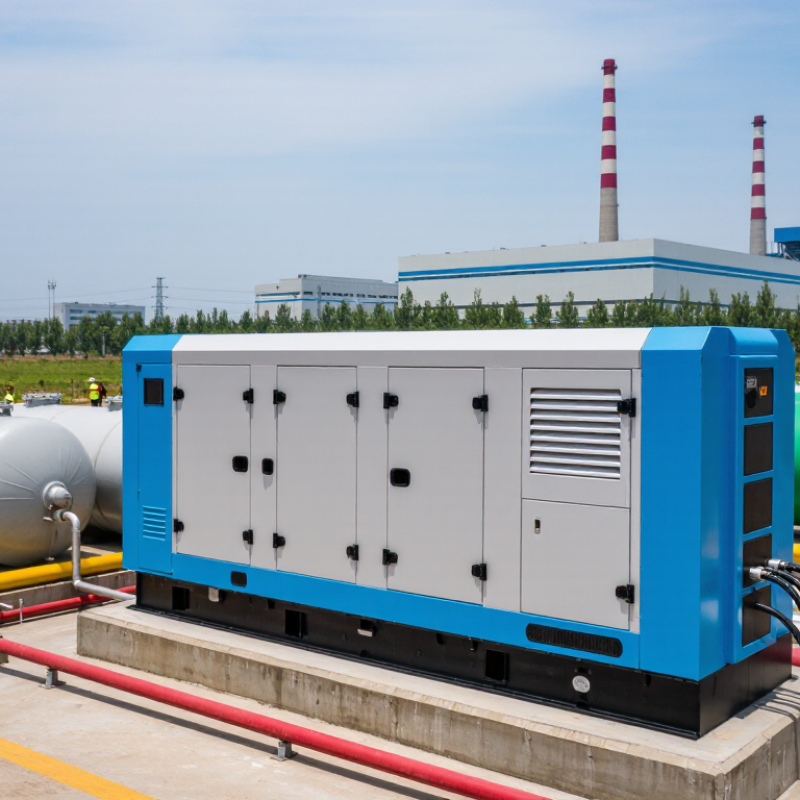
| Lean-Burn Natural Gas Reciprocating Set | Pipeline natural gas, compressed natural gas, treated renewable natural gas | 50 kW–4 MW per set | 35%–43% | 80%–90% | Fast start; generally suitable for load-following and backup operation. Load acceptance depends on engine size and controls. | Usually requires stable gas pressure and a relatively consistent methane number. Gas must be free of liquids, excessive moisture, and damaging contaminants. | Low carbon monoxide and nitrogen oxides when correctly tuned and equipped with oxidation or selective catalytic reduction systems where required. | Broad availability, compact installation, good part-load flexibility, and mature service support. | Commercial buildings, hospitals, data centers, industrial plants, microgrids, and utility-support projects. |
| Rich-Burn Natural Gas Reciprocating Set | Natural gas, propane-air mixtures, selected renewable gases | 30 kW–2 MW per set | 32%–40% | 78%–88% | Very good transient performance and rapid response to changing electrical loads. | Generally more tolerant of moderate fuel variation than lean-burn designs, but filtration and pressure control remain essential. | Three-way catalyst systems can provide effective control when the engine operates near a controlled air-fuel ratio. | Strong low-load operation, responsive performance, and suitability for smaller distributed-power installations. | Retail facilities, farms, small factories, standby systems, and distributed-energy projects. |
| High-Efficiency Large Natural Gas Engine Set | Pipeline natural gas, treated renewable natural gas | 1–10 MW per set | 40%–48% | 85%–92% | Fast enough for grid support and on-site generation, although larger units typically require more detailed synchronization and load-management planning. | Needs well-controlled gas pressure, filtration, and a fuel composition within the engine manufacturer’s specified limits. | High efficiency lowers carbon dioxide emissions per kilowatt-hour. Nitrogen oxide performance depends on combustion design and after-treatment. | High fuel utilization, lower operating cost per unit of output, and excellent suitability for continuous-duty operation. | Industrial campuses, district energy plants, large commercial sites, utilities, and combined heat and power facilities. |
| Biogas Reciprocating Generator Set | Anaerobic-digester gas, landfill gas, wastewater-treatment gas | 50 kW–3 MW per set | 30%–42% | 75%–90% | Good continuous-duty performance; response may be limited by gas-holder capacity and variable gas production. | Requires removal or control of hydrogen sulfide, siloxanes, moisture, particulates, and corrosive compounds. Methane content commonly varies by source. | Can substantially reduce net greenhouse-gas impact by recovering methane that would otherwise be released. Exhaust treatment is still required. | Uses a locally available waste-derived fuel and can provide reliable baseload power and useful heat. | Farms, wastewater plants, food-processing sites, landfill-gas projects, and organic-waste facilities. |
| Hydrogen-Ready or Hydrogen-Blended Gas Set | Natural gas blended with hydrogen; some units can operate on high-hydrogen or hydrogen fuel after approved conversion | 100 kW–10 MW per set | 30%–45% | 75%–90% | Comparable to other reciprocating gas sets when the fuel blend and control system are stable; ramping capability depends on the approved operating envelope. | Hydrogen changes flame speed, energy density, storage requirements, and combustion behavior. Fuel blending limits are engine- and project-specific. | Carbon dioxide emissions decrease as the hydrogen share increases. Nitrogen oxide emissions may require specialized combustion control or after-treatment. | Supports staged decarbonization while retaining familiar generator-set architecture. | Microgrids, critical infrastructure, industrial sites, renewable-energy balancing, and low-carbon demonstration projects. |
| Dual-Fuel Gas-Diesel Generator Set | Natural gas or biogas combined with a small quantity of diesel pilot fuel | 500 kW–5 MW per set | 35%–45% in gas mode | 80%–90% | Strong starting and transient performance because liquid fuel can support ignition and load acceptance. | Can continue operating on diesel if gas supply is interrupted. Gas pressure, quality, and the permitted gas substitution ratio must be verified. | Lower carbon dioxide and particulate emissions than full-load diesel operation when a high gas substitution ratio is achieved; diesel-related emissions remain. | Improves fuel security and operational continuity where gas availability is intermittent. | Remote sites, mines, islands, oil and gas facilities, backup power, and locations with unreliable pipeline gas. |
| Microturbine Gas Generator | Natural gas, biogas, propane, renewable natural gas, selected low-pressure gases | 30 kW–500 kW per unit | 25%–35% | 65%–85% | Good modular response and low vibration; full-load efficiency is generally lower than that of large reciprocating engines. | Often accepts a range of gaseous fuels, but gas pressure, heating value, contaminants, and moisture must remain within equipment limits. | Low particulate emissions and relatively low nitrogen oxide emissions; carbon dioxide output depends mainly on fuel type and efficiency. | Small footprint, low vibration, simple modular deployment, and useful exhaust heat for smaller CHP systems. | Commercial buildings, telecom sites, hotels, small industrial facilities, and distributed CHP projects. |
| Gas Turbine Generator Set | Natural gas, treated biogas, renewable natural gas, selected liquid or gaseous backup fuels | 1–300+ MW per unit | 25%–40% simple cycle; higher in combined-cycle configurations | 65%–90% in CHP or combined-cycle applications | Generally slower to start from a cold condition than reciprocating sets, but well suited to large, steady loads and utility-scale operation. | Requires appropriate gas pressure and fuel treatment. Performance is affected by ambient temperature, altitude, and inlet-air conditions. | Low particulate emissions and potentially low nitrogen oxide emissions with dry low-emission combustion or after-treatment. | High power density, low vibration, and strong suitability for large-scale continuous generation. | Utilities, large industrial plants, pipeline compressor stations, district energy, and utility-scale CHP. |