
2026 Best PVC Door Cutting Machine Buying Guide
Choosing a Pvc Door Cutting Machine in 2026 requires more than comparing motor power or advertising claims. A reliable buyer studies cutting accuracy, profile compatibility, table stability, dust control, software support, and after-sales service. These details affect every door frame, especially when workshops process different PVC profiles throughout the day.
According to industrial machinery consultant Michael Hartwell, “A good cutting machine should make accuracy feel routine, not accidental.” This principle matters on a busy production floor. A clean blade should pass through the profile without excessive vibration. The operator should see a straight cut, limited waste, and consistent dimensions across repeated jobs. Small errors become expensive when several frames require reworking.
This guide examines the 2026 market from a practical purchasing perspective. It compares single-head and double-head designs, automatic positioning systems, blade specifications, safety features, and maintenance requirements. It also considers installation space and operator training, which buyers sometimes overlook. That can be a costly mistake.
Performance is not everything.
Some machines promise impressive speed but struggle with thin profiles or long production cycles. Others offer advanced controls that small workshops rarely use. Your actual workload matters more than a polished specification sheet. Measure your daily output, profile sizes, available power, and acceptable cutting tolerance before choosing.
We will also discuss price, warranty coverage, spare parts, and supplier reliability. The cheapest option may appear attractive. However, delayed repairs can stop production for days. A balanced decision should protect accuracy, productivity, safety, and long-term operating value.
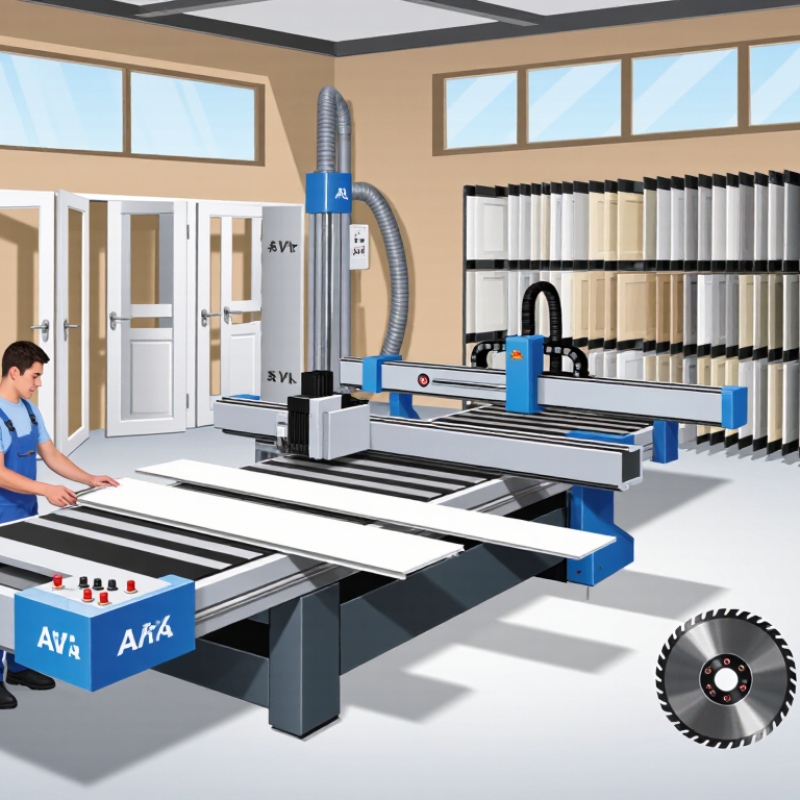
What Is a PVC Door Cutting Machine and How Does It Work?
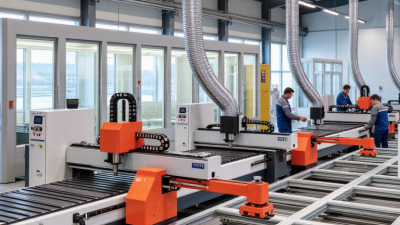
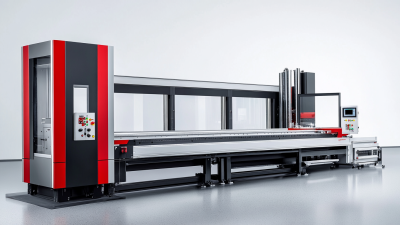
A PVC door cutting machine is a precision system that cuts PVC profiles into frame, sash, and reinforcement sections. It usually combines a measuring stop, clamping unit, carbide saw blade, and dust extraction. The operator enters the required length, places the profile, and secures it before cutting. Double-head models can cut both ends in one cycle, reducing measurement errors and handling time.
The process looks simple, but accuracy depends on more than blade speed. The machine must control profile movement, cutting angle, saw vibration, and thermal expansion. A 45-degree cut may produce a clean corner, while a small deviation can create visible gaps during welding. PVC is also sensitive to heat. Excessive friction can soften the edge and affect later assembly. Keep that in mind.
The Global PVC Doors and Windows Market Report 2024, published by Research and Markets, identifies construction activity and replacement demand as major growth drivers. Grand View Research reports that the broader doors market continues expanding through 2030, increasing pressure on fabricators to improve consistency and output. When comparing machines, check cutting tolerance, cycle time, profile capacity, blade diameter, safety interlocks, and service support. Ask for test cuts using your own profiles. Catalogue claims can mislead. A quiet machine is not automatically a precise one. Certain workshops may still prefer manual adjustment for unusual shapes, although that choice often increases inspection time.
| Buying or Technical Dimension | Typical Data or Specification | What It Means for PVC Door Production |
|---|---|---|
| What It Is | PVC door cutting machine | A machine designed to cut PVC door profiles, reinforcement sections, panels, or related components to accurate lengths and angles before assembly. |
| Common Machine Types | Single-head saw, double-head saw, CNC cutting center, and multi-function profile processing machine | Single-head models suit flexible batch work; double-head machines improve repeatability and productivity; CNC models combine cutting with drilling, routing, or marking. |
| Main Cutting Method | Rotating carbide-tipped circular saw blade | The blade removes material by controlled rotation. A fine-tooth blade and stable clamping help reduce chipping, burrs, and profile deformation. |
| Typical Materials | PVC profiles, uPVC profiles, coated profiles, aluminum reinforcement, and selected composite sections | Material compatibility depends on the blade, spindle power, clamping system, and machine manufacturer’s approved operating range. |
| Typical Cutting Angles | 90° and 45°; adjustable models commonly cover approximately 22.5° to 135° | Accurate 45° cuts are especially important for mitred door frames and sash components. Verify the actual angle range before purchase. |
| Typical Profile Length Capacity | Approximately 3,000 to 6,500 mm, depending on the machine bed and extension supports | A longer cutting bed is useful for full-length door profiles and reduces the need to reposition long workpieces. |
| Typical Saw Blade Diameter | Approximately 300 to 600 mm | Larger blades can provide greater cutting depth, but they also require a suitable motor, guard, arbor, and machine structure. |
| Typical Motor Power | Approximately 1.5 to 5.5 kW per saw head | Required power varies with material, blade diameter, cutting depth, feed rate, and whether the machine cuts one or multiple profiles at a time. |
| Typical Spindle Speed | Approximately 2,800 to 4,500 revolutions per minute | Correct speed must match the blade diameter, tooth geometry, and material. Excessive speed can increase heat, noise, or melting of PVC. |
| Typical Cutting Speed | Approximately 1,500 to 3,000 mm/min for many automated profile-cutting applications | Actual feed speed should be adjusted to the profile shape, wall thickness, blade condition, clamping stability, and required edge quality. |
| Typical Length Accuracy | Approximately ±0.1 to ±0.3 mm under controlled conditions | Accuracy depends on machine calibration, profile straightness, measuring system, temperature, saw condition, and operator setup. |
| Typical Angle Accuracy | Approximately ±5 to ±10 arc minutes on precision machines | Good angle accuracy helps create tight mitre joints and reduces visible gaps during door-frame assembly. |
| Workpiece Clamping | Pneumatic clamps are common; manual or hydraulic systems are also available | Clamping prevents movement and vibration during cutting. Soft contact pads help protect finished PVC surfaces. |
| How the Machine Works: Step 1 | Measure and position the profile | The operator enters the required length and angle or selects a stored cutting program. A stop, encoder, or servo positioning system places the profile at the target position. |
| How the Machine Works: Step 2 | Clamp the workpiece | Pneumatic or manual clamps hold the profile firmly against the reference fence and support table to limit movement during cutting. |
| How the Machine Works: Step 3 | Start the saw and make the cut | The blade reaches its operating speed before feeding through the profile. Automated machines control the cutting stroke and return the saw head after the cut. |
| How the Machine Works: Step 4 | Unload and inspect | The finished piece is removed, checked for length, angle, burrs, chips, and surface damage, then transferred to drilling, welding, routing, or assembly. |
| Control System | Digital display, PLC control, touch-screen HMI, or CNC controller | Basic controls suit straightforward cutting. CNC controls are preferable when the production line requires recipe storage, automatic positioning, barcode input, or multiple operations. |
| Production Capacity | Often 150 to 500 cuts per shift for manual or semi-automatic work; higher output is possible with automated double-head or CNC systems | Real output depends on cut length, number of pieces per cycle, loading time, operator skill, and the number of operations performed after cutting. |
| Dust and Chip Collection | Extraction ports commonly range from approximately 80 to 120 mm in diameter | A suitable extraction system helps control PVC chips and dust, keeps the work area cleaner, and improves visibility around the cutting zone. |
| Compressed-Air Requirement | Commonly approximately 0.6 to 0.8 MPa for pneumatic clamping and motion systems | Check the required air pressure, air consumption, filtration, and compressor capacity before installation. |
| Electrical Supply | Common industrial configurations include three-phase 380–415 V at 50 Hz; other regional voltages may be available | Electrical requirements must match the local power system and should be confirmed with the machine specification sheet before ordering. |
| Recommended Blade Features | Carbide-tipped blade, profile-appropriate tooth count, stable arbor, and correct rake angle | The blade should be selected for PVC or mixed PVC-aluminum cutting. Using an unsuitable blade can cause melting, vibration, poor finish, or premature wear. |
| Safety Features to Check | Blade guard, emergency-stop button, interlocked access door, clamp monitoring, overload protection, and restart prevention | These features reduce exposure to rotating parts and help prevent unintended operation after power interruption or access to the cutting zone. |
| Automation Level | Manual, semi-automatic, automatic, or CNC-controlled | Choose based on order volume, product variety, labor availability, required accuracy, and the need to connect with software or other production equipment. |
| Best Choice for Small Workshops | Single-head or semi-automatic saw with adjustable angle, digital length stop, and reliable clamping | This configuration generally offers a lower initial investment and sufficient flexibility for varied, low-to-medium volume orders. |
| Best Choice for High-Volume Production | Double-head saw or CNC cutting center with automatic positioning and program storage | These systems can reduce manual measuring, shorten cycle times, and maintain more consistent results across repeated batches. |
| Key Maintenance Tasks | Clean chips, inspect the blade, lubricate moving parts, check clamps, verify stops, and recalibrate measuring systems | Regular maintenance protects cutting accuracy, extends component life, and helps identify safety or quality problems before they affect production. |
| Important Buying Questions | What profiles will be cut? What lengths and angles are required? What daily output is expected? Is CNC integration needed? | These questions determine the appropriate blade size, motor power, bed length, automation level, clamping arrangement, and control system. |
Related Posts
-
Top PVC Door Making Machine Manufacturers in China
-
The Definitive Ultimate Guide to Choosing the Best Thermal Break Machine for Your Needs
-
Discover Innovative Aluminium Door Machines at the Record Breaking 137th Canton Fair
-

Crafting Excellence: Trustworthy Wood Window Production Solutions from China to the World
-
How to Choose Window Manufacturing Equipment?
-
Revolutionizing Efficiency: The Latest Innovations in Window Making Equipment for Global Buyers