
2026 Best Fitness Trampolines for Global Buyers?

Choosing the best Fitness Trampolines for global buyers in 2026 requires more than comparing prices and star ratings. A trampoline may look impressive online, yet feel unstable after ten minutes of repeated jumping. This guide examines bounce response, frame strength, mat durability, enclosure design, assembly quality, and long-term comfort. It also considers different homes, studios, climates, and user expectations.

Safety remains central. A wide base, secure springs or elastic bands, padded edges, and a dependable handrail can improve confidence during low-impact workouts. Buyers should check the stated user weight limit carefully. They should also review available product documentation, warranty terms, replacement-part access, and regional electrical requirements for connected equipment. These details often matter more than colorful marketing claims.

Real-world experience reveals small differences. A quiet trampoline suits an upstairs apartment better than a louder spring model. A heavier frame may feel reassuring, but it can become difficult to move or store. Some compact designs save space yet offer less room for lateral movement. No single model fits every household. Even careful comparisons have limits.

This 2026 overview will compare leading options for home users, coaches, rehabilitation-focused buyers, and commercial fitness spaces. It will explain which features deserve attention and which claims deserve skepticism. Readers should confirm current specifications before purchasing, because materials, warranties, and regional availability can change. The strongest choice is not always the most expensive one. It is the model that matches safe training goals, available space, user experience, and realistic maintenance needs.
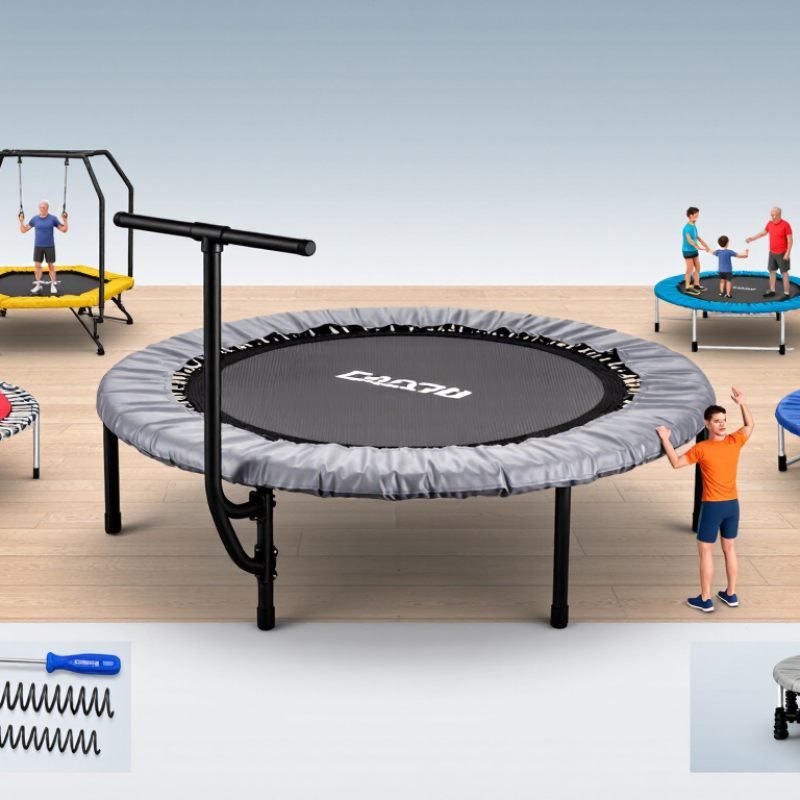
2026 Best Fitness Trampolines for Global Buyers?

What Is a Fitness Trampoline? Key Types, Sizes, and 2026 Uses

A fitness trampoline, often called a rebounder, is a compact exercise platform with a flexible jumping surface. Unlike recreational trampolines, it supports controlled, repeated movements for low-impact cardio, balance, and coordination. The World Health Organization reported in 2024 that 1.8 billion adults were insufficiently active in 2022. That gap keeps accessible home exercise relevant. The Global Wellness Institute’s 2024 report valued the global physical activity economy at about 1.06 trillion dollars in 2023. The figure supports demand, but it does not prove every rebounder delivers equal results.

Common home sizes range from 36 to 48 inches, while studio models may reach 49 to 55 inches. Smaller frames fit beside a sofa and suit marching, heel lifts, and light bouncing. Larger surfaces feel more stable during lateral steps. Spring systems usually provide a firmer, sharper response. Elastic-cord systems often feel quieter and gentler. A handlebar can help beginners, but it should not replace proper balance control.

In 2026, buyers may use rebounders for short apartment workouts, coached classes, travel routines, and workplace movement breaks. Some models fold, although folding joints can introduce wear and unwanted movement. A practical check includes frame diameter, user-weight testing, mat tension, replacement-part access, and corrosion protection. Look for documented testing against applicable local safety requirements. I would not assume a higher price means better durability. Product information remains inconsistent across markets, so measuring the storage space first is wiser than trusting attractive photographs.

How ACE Data Measures Rebounding: 6.0 METs and 8.1–9.4 kcal/min

2026 Best Fitness Trampolines for Global Buyers?

Rebounding deserves closer attention than its playful image suggests. An American Council on Exercise study measured about 6.0 METs during structured mini-trampoline exercise. That level matches moderate-to-vigorous activity for many adults. Reported energy use reached roughly 8.1–9.4 kcal per minute, depending on sex, body mass, and movement pace. These numbers are useful, but not universal.

The 2018 Physical Activity Guidelines recommend 150–300 minutes of moderate aerobic activity weekly. A trampoline can support that target with short, controlled sessions. However, calorie estimates may overstate real-world results. Holding the frame, bouncing softly, or pausing often changes the workload. A reliable buying decision should consider mat stability, frame height, noise, transport, and user weight limits. Safety details matter more than dramatic calorie claims.

Tips: Choose a stable surface and clear at least one arm’s length around the equipment. Begin with five-minute sessions, keeping both feet close to the mat. Watch your landing, not the display. A heart-rate monitor can add context, although it is not perfect. Beginners may need support at first; experienced users may still misjudge fatigue. Check regional safety standards and the manufacturer’s testing documents before purchasing. Fitness data informs the choice, but personal experience must verify it.

Which Safety Standards Apply? ASTM F381, EN 13219, and Global Compliance

When selecting a fitness trampoline for global markets, safety compliance matters more than spring count or frame color. I have seen attractive equipment fail basic documentation checks. That mistake becomes expensive.

ASTM F381 addresses consumer trampolines, including construction, assembly, use, labeling, and warnings. Buyers should confirm the exact edition and product scope. A small rebounder may not match every requirement automatically. Test reports should identify the tested model, materials, load rating, and inspection methods. Labels must remain readable after repeated cleaning and movement.

EN 13219 covers gymnastics trampolines and specifies functional and safety requirements, including stability, padding, performance, and testing. It may not fully represent every home fitness rebounder. This distinction deserves attention. European buyers should check whether the product falls within this standard’s intended category. Other markets may require local electrical, chemical, packaging, or consumer-product rules.

Global compliance is not one universal certificate. Importers should request a technical file, risk assessment, traceable test reports, user instructions, and production-control records. Verify the laboratory’s competence and the report’s date. Factory samples can differ from mass production. That is easy to overlook. Regular inspections, correct assembly instructions, and realistic user-weight limits support safer operation. A supplier’s confident claim is useful, but independent evidence is stronger.

How to Compare Springs, Bungees, Frames, Weight Limits, and Stability

2026 Best Fitness Trampolines for Global Buyers?

Springs deliver a sharper rebound and usually feel familiar underfoot. However, exposed coils can pinch fingers and create more maintenance points. Bungees are quieter and smoother, but their tension may change with heat, age, and repeated stretching. I would test both systems after ten minutes, not after one careful bounce. A stable frame needs wide legs, firm rubber feet, and clean, continuous welds. Round frames can shift on hard floors. Angled legs usually resist sideways movement better.

Weight limits deserve careful reading. Some sellers list maximum user weight, while others describe total frame capacity. These figures are not interchangeable. Choose a meaningful margin above the heaviest user, especially for fast routines. ASTM F381-22 provides safety and labeling guidance for consumer trampolines, but it does not replace hands-on inspection. The U.S. Consumer Product Safety Commission’s 2014–2016 NEISS analysis estimated about 100,000 emergency-department-treated trampoline injuries. That figure is not a product ranking, but it makes stability and controlled use impossible to ignore.

Tips: Place the trampoline on a level, non-slip surface. Measure the leg spread before buying. Ask for frame-tube thickness, tested weight limits, and replacement bungee availability. WHO’s 2020 activity guidelines encourage 150–300 minutes of moderate activity weekly, so durability matters for regular users. I still distrust impressive rebound claims without test conditions. A light frame may feel convenient, then wander across the floor during lateral movements. Check it in real use.

2026 Best Fitness Trampolines for Global Buyers? — How to Compare Springs, Bungees, Frames, Weight Limits, and Stability
Configuration Suspension & Rebound Typical Mat Diameter Frame & Portability Advertised User-Capacity Range* Stability Considerations Best Fit
Compact steel-spring model Metal springs deliver a responsive, often firmer rebound. Spring noise and feel vary with spring design, mat tension, and assembly. About 36–40 in (91–102 cm) Steel frame; some designs fold for storage. Check whether the legs or frame need tools for folding. Often listed around 250–300 lb (113–136 kg); confirm the exact model rating. Smaller footprint can move more on smooth floors. Look for evenly spaced legs, secure joints, and nonslip feet. Smaller rooms and buyers who prefer a more direct rebound.
Standard-size steel-spring model Springs generally provide a crisp, energetic response. A protective spring cover should fit securely and remain in place during use. About 40–48 in (102–122 cm) Steel construction is common; compare frame rigidity, leg attachment, and whether folding parts lock securely. Often listed around 300–400 lb (136–181 kg); ratings differ by model and test method. A wider base and well-braced legs can improve steadiness. Check for rocking on a level floor before use. General home workouts where a lively rebound is preferred.
Compact bungee-cord model Elastic cords usually produce a quieter, softer-feeling rebound than metal springs; cord tension and durability depend on the design and materials. About 36–40 in (91–102 cm) May use a steel frame and replaceable or non-replaceable cords. Confirm replacement-part availability before purchase. Often listed around 250–330 lb (113–150 kg); use the specific product rating, not the suspension type, as the limit. Check cord attachment points, leg layout, and floor grip. A soft rebound does not by itself guarantee a stable frame. Quieter indoor exercise and users who prefer a gentler-feeling bounce.
Wide bungee-cord model Elastic suspension commonly gives a controlled, quieter bounce. The actual rebound depends on cord count, tension, mat, and user weight. About 40–48 in (102–122 cm) Typically larger to store than compact models. Inspect the frame joints and ask whether cords are replaceable. Often listed around 300–450 lb (136–204 kg); verify the rated limit for the exact model. A broader footprint may help, but stability still depends on leg spacing, frame stiffness, floor surface, and assembly. Buyers seeking a larger exercise surface and a quieter rebound.
Model with a support handle Can use either springs or bungees; the handle does not determine rebound or frame capacity. Commonly about 36–48 in (91–122 cm) Handle may be removable, adjustable, or fixed. Check its attachment points and locking mechanism. Use the trampoline’s stated user-capacity rating; do not assume a handle increases that limit. Useful for balance support, but it is not a substitute for a stable base. Avoid pulling hard on the handle unless designed for that use. Users who want a handhold for balance during low-impact routines.

How to compare: Match the rated user capacity to the user’s body weight and follow the manufacturer’s instructions. Capacity figures above are indicative ranges seen in product listings, not universal specifications or safety certifications; ratings, measuring conventions, and available sizes vary by model and market. For any option, verify the exact rating, assembled dimensions, replacement-part availability, warranty terms, and local safety requirements. Use on a level, nonslip surface and inspect the frame, suspension, mat, and fasteners regularly.

How Global Buyers Evaluate Warranty, Packaging, Certifications, and Import Costs

2026 Best Fitness Trampolines for Global Buyers?

Global buyers rarely choose a fitness trampoline by price alone. Warranty terms often reveal the supplier’s real confidence. Check coverage for the frame, springs, mat, and handlebar separately. A twelve-month warranty may exclude transport, labor, or damage caused by poor assembly. Ask for the claim process, response time, and replacement-part availability. Written details matter more than friendly promises.

Packaging deserves practical inspection. A heavy steel frame needs corner protection, moisture barriers, and internal bracing. Photograph the packed unit before shipment. This can support damage claims later. Confirm carton dimensions and gross weight before booking freight. Small changes may increase container loading efficiency, but weak packaging creates expensive returns. That trade-off is easy to underestimate.

Certifications must match the destination market and product design. Request current test reports, material declarations, and factory quality records. Do not accept a logo image without a traceable document number. Import costs include more than the factory quotation. Estimate freight, insurance, customs duties, clearance fees, inland delivery, and possible inspection charges. Use landed cost per unit, not the invoice price. Currency changes can also disturb the budget. My own caution is simple: even careful spreadsheets miss something. Leave a reasonable contingency, and verify every assumption with a freight forwarder and a qualified compliance professional.

Optimized by Optimole