
2026 Best Ammonium Sulfate Nitrogen Fertilizer for Buyers

Ammonium Sulfate Nitrogen offers buyers two nutrients in one granular product: nitrogen and sulfur. A common commercial grade contains about 21% nitrogen and 24% sulfur, though specifications can vary. Check the product certificate, not just the bag label. That detail matters.

The broader market also deserves attention. FAO’s World Fertilizer Trends and Outlook to 2026 estimated global fertilizer use at 185.1 million tonnes of nutrients in 2022, a 2.5% decline from 2021. This figure covers fertilizers overall, not ammonium sulfate alone, but it shows why buyers should compare supply, delivered cost, and nutrient value rather than relying on headline prices. Soil-fertility specialist Achim Dobermann has emphasized in his nutrient-management work that fertilizer decisions should match crop needs and local soil conditions. It is a useful principle, though not a substitute for field testing.

For a 2026 purchase, compare nitrogen and sulfur guarantees, particle size, moisture, packaging, and batch consistency. Ask for a current certificate of analysis and confirm that granules suit your spreading equipment. Ammonium sulfate can be a practical sulfur source, but its value depends on crop demand, soil conditions, and application timing. There is no universal best grade. A buyer may still miss something: freight, storage, or uneven spreading can change the real cost per usable nutrient. Check the numbers against your own fields.
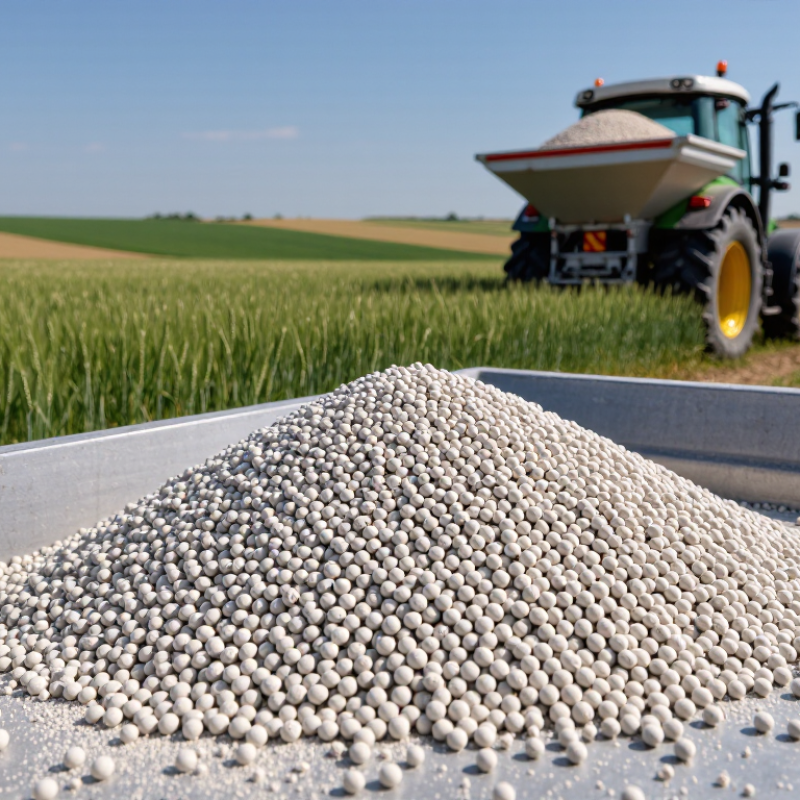
2026 Best Ammonium Sulfate Nitrogen Fertilizer for Buyers

What Ammonium Sulfate Fertilizer Is and How It Works

Ammonium sulfate, (NH₄)₂SO₄, is a water-soluble fertilizer supplying nitrogen and sulfur. University of Minnesota Extension lists its common grade as 21-0-0-24S: 21% nitrogen and 24% sulfur by weight. That means a 50-kilogram bag contains about 10.5 kilograms of nitrogen and 12 kilograms of sulfur. Check the product label, since grades can vary.

After application, moisture dissolves the granules. Roots can take up ammonium nitrogen directly; soil microbes can also convert it into nitrate. That process may gradually acidify soil, especially with repeated use. The sulfate supplies sulfur, which plants need to build proteins. On a cool spring morning, the granules may sit visibly between rows until rain or irrigation moves nutrients into the soil. But visible dissolution does not prove the crop needs more fertilizer.

Tips: Use a soil test to guide rates. Consider crop needs, soil pH, and sulfur status. The 21-0-0-24S analysis is useful, but it is not a prescription. Overapplication can waste money and increase nutrient loss. For local recommendations, consult a qualified agronomist or extension service.

Key Nutrient Benefits and Suitable Crops

Ammonium sulfate is valued for supplying two essential nutrients in one granular fertilizer. A common grade contains about 21% nitrogen and 24% sulfur, though buyers should confirm the product label. Plants use nitrogen to build leafy growth, while sulfur supports protein formation and enzyme activity. The sulfate form is readily available when moisture dissolves the granules. That can help where soil tests show sulfur is low.

Crops with substantial sulfur needs may benefit, including canola, cabbage, onions, and other brassicas or alliums. Corn can also respond on sulfur-deficient fields, especially lighter soils with little organic matter. Watch the crop, not just the calendar. Pale young leaves and uneven growth can have several causes, so symptoms alone do not confirm a sulfur shortage.

Match the rate to a soil test, crop demand, and local guidance. Ammonium sulfate can gradually increase soil acidity, so repeated use deserves attention on already acidic fields. Keep concentrated fertilizer away from seeds and young roots; contact can injure them. Small details matter. I have seen a sound nutrient choice underperform when placement or timing was overlooked. Applying before rain may help granules dissolve, but heavy rain can move nutrients beyond shallow roots.

How to Compare Fertilizer Grades and Product Quality

A useful benchmark is 21-0-0-24S: about 21% nitrogen and 24% sulfur. FAO fertilizer guidance lists ammonium sulfate near these nutrient levels, but actual analyses can vary. Compare the guaranteed analysis on each certificate of analysis, not just the product name. Check whether nitrogen and sulfur are reported on the same basis, and confirm the figures meet your crop’s needs. Small label differences matter.

Physical quality matters too. Ask for moisture, particle-size distribution, and impurity results. Uniform granules spread more evenly; excess dust can drift or separate during handling. Look closely at the sample: do the granules feel dry, and do they crush easily? These checks are useful, though appearance alone proves little. Request a recent batch certificate and compare it with the delivered lot.

IFA’s 2024 fertilizer outlook discusses changing global nutrient demand, but market forecasts cannot verify a specific shipment’s quality. For that, prioritize traceable batch data and clear testing methods. I would also check storage and transport conditions, since damp material can cake before use. Not glamorous. Still, a grade that looks right on paper may perform poorly if the granules arrive wet or inconsistent.

Choosing the Best Ammonium Sulfate for Your Soil and Budget

Choosing the Best Ammonium Sulfate for Your Soil and Budget

The best ammonium sulfate depends on what your soil and crop actually need. Many standard grades contain about 21% nitrogen and 24% sulfur, but check the product label. A soil test can show whether sulfur is deficient and whether your soil is already acidic. Ammonium sulfate can lower soil pH over time, so repeated use deserves care, especially in acidic fields. More is not automatically better.

Compare cost per unit of nutrient, not just the price per bag. For example, include both nitrogen and sulfur when calculating value, and consider whether your crop can use both. Check delivery charges, spreader compatibility, and granule consistency too; dusty or uneven material may be harder to apply evenly. A low price can look attractive, yet the wrong nutrient balance may cost more later. This comparison is useful, but it cannot replace a crop-specific recommendation.

Tips: Match the rate to a soil test and local crop guidance. Store fertilizer dry, and avoid guessing at application rates. If pH is low, ask an agronomist whether another nitrogen source would fit better.

2026 Best Ammonium Sulfate Nitrogen Fertilizer for Buyers - Choosing the Best Ammonium Sulfate for Your Soil and Budget

Use this guide to compare common ammonium sulfate forms, check typical nutrient values, and estimate product quantities. Actual specifications vary by product; confirm the guaranteed analysis and follow local soil-test and crop recommendations.

Buyer comparison: choosing an ammonium sulfate product
Product consideration Typical characteristics Best fit Budget and handling considerations What to verify before purchase
Nutrient analysis Common analysis is approximately 21% nitrogen (N) and 24% sulfur (S), often shown as 21-0-0-24S. Guaranteed values can vary. Fields or crops needing both nitrogen and sulfur, based on a soil test or crop recommendation. At 21% N, about 4.76 kg of product supplies 1 kg of N. Compare products by cost per unit of nutrient, not just price per tonne. Guaranteed N and sulfur percentages, nutrient form, and whether the label reports sulfur as S.
Granular form Solid particles intended for dry handling and spreading; particle size and hardness vary by product. Broadcast or blended dry-fertilizer programs when the product is compatible with the spreader and blend. Check particle-size compatibility with other blend components to help reduce segregation during transport and spreading. Particle-size range, moisture condition, storage guidance, and compatibility with intended blends.
Crystalline or fine form More finely divided material than many granular products; dissolution and handling properties depend on the specific product. Uses where the product label and equipment allow this form, including suitable prepared solutions. Fine material may be more prone to dusting or caking; account for handling equipment and storage conditions. Solubility instructions, dust or handling guidance, and suitability for the intended application system.
Soil pH suitability Ammonium-based nitrogen can contribute to soil acidification as ammonium is converted in soil. The effect builds over time and depends on conditions and management. Soils and crops for which the nitrogen and sulfur are suitable and soil pH is monitored. Repeated applications may add to the need for pH monitoring and, where recommended, liming. Current soil pH, buffer pH where relevant, crop tolerance, and local lime recommendations.
Crop and sulfur need Supplies both nitrogen and sulfur; it is not a complete fertilizer and contains no guaranteed phosphate or potash in a 21-0-0 analysis. Crops with a confirmed sulfur requirement, or programs where ammonium sulfate fits the nitrogen plan. Avoid paying for sulfur that is not needed; account separately for phosphorus, potassium, and other required nutrients. Soil-test results, crop nutrient-removal guidance, and the full fertilizer plan.
Storage and quality As with other dry fertilizers, moisture exposure can affect flow and storage condition. Buyers able to keep product dry and handle it according to the supplier’s instructions. Consider storage, delivery, spreading, and loss risks as part of total cost—not only the quoted product price. Packaging condition, storage instructions, delivery terms, and a current product specification sheet.
Illustrative product quantities calculated from a 21% nitrogen analysis
Nitrogen target Approximate ammonium sulfate required Approximate sulfur supplied at 24% S How to use this estimate
30 kg N/ha 143 kg product/ha 34 kg S/ha Calculation only: nitrogen target ÷ 0.21.
60 kg N/ha 286 kg product/ha 69 kg S/ha Check that the accompanying sulfur rate is appropriate for the crop and soil.
100 kg N/ha 476 kg product/ha 114 kg S/ha Do not use this as a blanket recommendation; confirm the total nutrient plan first.
50 lb N/acre 238 lb product/acre 57 lb S/acre Calculation only: nitrogen target ÷ 0.21.
100 lb N/acre 476 lb product/acre 114 lb S/acre Confirm the rate, timing, and placement with local agronomic guidance.

Important: These quantities are arithmetic examples using 21% N and 24% S, not crop-rate recommendations. Actual fertilizer needs depend on soil tests, crop, yield goal, previous applications, and local guidance. Recalculate using the guaranteed analysis on the product label.

Application, Handling, and Storage Considerations

Ammonium sulfate can supply nitrogen and sulfur, but the right rate depends on the crop, soil, and local recommendations. A soil test helps prevent guesswork. Calibrate the spreader before covering a large field, and check the pattern across a short test strip. Keep granules away from seed unless the application plan specifically allows direct contact. It is tempting to spread by eye, but that shortcut deserves a second thought. Small checks matter. Avoid applying more than the crop needs, especially where runoff could carry nutrients into drains or waterways.

Handle bags gently to limit dust and spills. Wear gloves and eye protection, and follow the product label and safety data sheet for protective equipment and cleanup. Avoid breathing dust; wash hands after handling. Store the fertilizer in its original, closed packaging in a cool, dry, well-ventilated place. Keep bags on pallets, away from damp floors, roof leaks, and direct weather. Keep the storage area orderly, and separate the material from other products as directed by its safety data sheet. Check bags periodically for tears or moisture damage. A damp, hardened product may spread unevenly, even if it still looks usable.

Optimized by Optimole